Cute Cat Care SVG Clipart
A Designer’s First Look: Whimsy That Stitches Clean
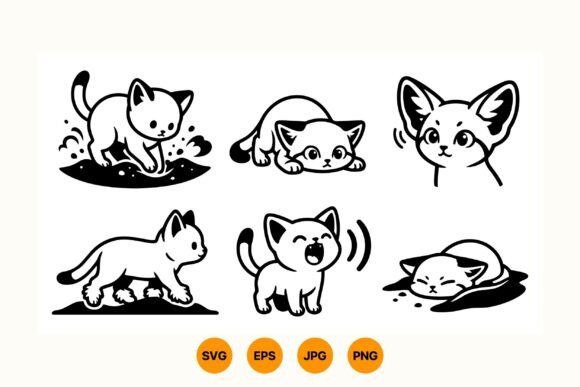
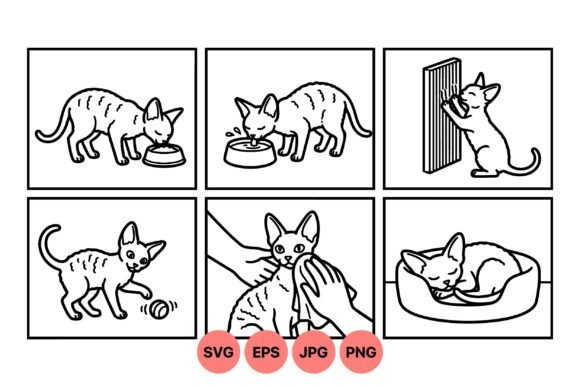
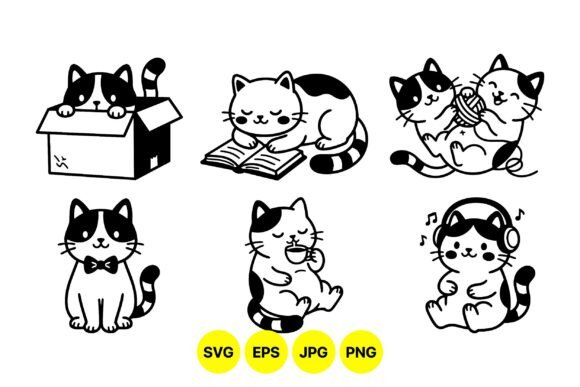
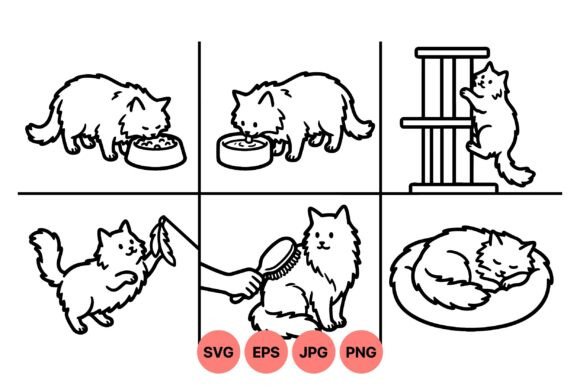
Opening the ZIP folder for Cute Cat Care SVG Clipart, I immediately notice what makes this set stand out: it’s not just cute—it’s *considered*. The black and white line art is crisp, intentional, and built around rhythm rather than clutter. Each cat—eating, drinking, playing, climbing, sleeping—is drawn with gentle curves and consistent line weight. There’s no visual noise, no over-rendered fur or distracting shadows. That simplicity isn’t a shortcut; it’s a signal that this was designed *for translation*, not just screen viewing. As an embroidery designer who’s stitched hundreds of pet-themed pieces, I know that clarity in line art directly predicts how well a machine embroidery design will hold up across fabric types, hoop sizes, and stitch densities.
Real Project Test: A Personalized Nursery Pillow Cover
Last week, I used one of the sleeping cat motifs from Cute Cat Care SVG Clipart on a linen pillow cover for a baby shower gift. I resized it to 3.2” wide, digitized it as a clean running stitch outline with subtle satin-stitched inner ears (added manually), and paired it with soft ecru thread on oat-colored linen. The result? Calm, tactile, and unmistakably handmade—not “clipart-y.” Customers notice that difference. When your embroidered patch or tote bag design reads as thoughtful rather than templated, it lifts perceived value. This set doesn’t scream “look at me!”—it invites quiet appreciation. That makes it ideal for boutique branding, nursery decor, tea towels, and personalized gifts where subtlety builds trust.
Where It Shines—and Where It Needs Thought
Cute Cat Care SVG Clipart excels in projects where charm meets craftsmanship:
- Custom apparel: Works beautifully on sweatshirts and structured cotton tees—especially when stitched as a single-motif chest emblem or sleeve accent.
- Embroidered patches: The clean outlines digitize cleanly into sew-on or iron-on patches with minimal underlay and no fill-stitch bleed.
- Baby embroidery: Gentle scale and rounded forms read as soothing—not busy—on onesies, burp cloths, and swaddles.
- Holiday embroidery: Pair the “playing with toy” cat with a tiny jingle bell or bow for subtle seasonal charm on kitchen towels or aprons.
- Etsy seller assets: These illustrations convert well into printable mockups, digital product previews, and social media banners—giving your craft business cohesive, on-brand visuals.
But let’s be real: not every surface welcomes this style equally. On thin or stretchy fabrics like jersey or rayon challis, fine line details can blur without proper stabilizer—so always test on scrap first. Curved surfaces like caps require careful placement; the climbing cat motif, for example, needs vertical alignment to avoid distortion. And while the black-and-white line art looks lovely on light fabric, stitching it on dark garments demands high-contrast thread (think bright white or pale mint) and possibly a light underlay to prevent shadowing.
Design Integrity Meets Commercial Practicality
As someone who sells both finished embroidered goods and digital embroidery files, I pay close attention to how a design affects customer perception—and Cute Cat Care SVG Clipart delivers quietly. It doesn’t rely on glitter, gradients, or forced cuteness to get attention. Instead, it leans into warmth and familiarity—the kind that makes a buyer pause mid-scroll on Etsy or reach for a hand-stitched apron at a craft fair. That authenticity translates directly to brand consistency. If your small shop specializes in mindful, small-batch home goods, this set reinforces your voice. If you’re an apparel decorator building a pet-lover collection, these motifs slot in naturally alongside custom lettering or minimalist botanicals.
That said, don’t assume automatic compatibility. Since Cute Cat Care SVG Clipart arrives as SVG (not pre-digitized embroidery files), you’ll need to convert it yourself—or work with a digitizer. That means checking stitch density before finalizing any commercial embroidery project. Too few stitches? The lines vanish on textured fabric. Too many? You risk puckering on lightweight cotton or stiffness on baby items. Also verify licensing: if you plan to sell finished products (like embroidered tote bags) or resell digitized versions, confirm whether the Graphics license covers commercial embroidery use. When in doubt, contact the seller—better than risking a takedown.
Five Must-Do Checks Before Stitching
- Test on scrap fabric—especially if using textured weaves, knits, or dark backgrounds.
- Review thread color contrast in natural light; soft pastels often read better than stark black/white combos on delicate items.
- Confirm hoop size fit; some motifs (like the full “cat care” scene layout) may need larger hoops or clever cropping for smaller items like caps or socks.
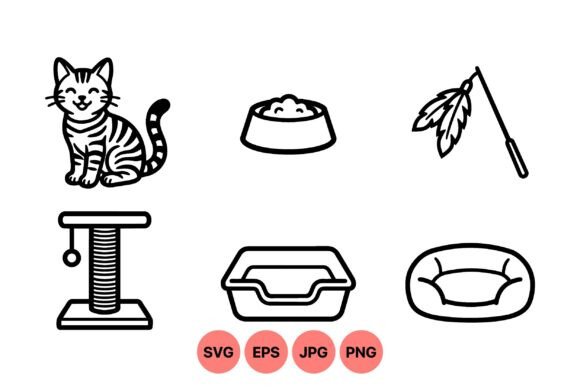
- Inspect small details—tiny paws, toy strings, or water bowl rims—under magnification to ensure they’ll survive digitization.
- Use appropriate stabilizer: tear-away for stable wovens, cut-away for knits, and lightweight mesh for sheer fabrics.
Final Thought: Not Just Clipart—A Design Partner
Cute Cat Care SVG Clipart isn’t flashy—but then, neither is a perfectly balanced satin stitch or a flawlessly hooped towel edge. Its strength lies in reliability. For the Etsy seller adding a new line of pet-themed kitchen textiles, the small business owner launching a nursery collection, or the hobbyist stitching heartfelt gifts, this set offers flexibility without compromise. It’s illustration with intention—designed to become part of something real: a child’s favorite pillow, a café’s embroidered apron, a holiday gift that gets framed instead of folded away. In the world of handmade product and custom apparel, that kind of quiet resonance? That’s gold.