Home Is Where Cat Sleeps SVG
A Warm, Quiet Moment—Perfect for Handmade Gifts That Feel Like Hugs
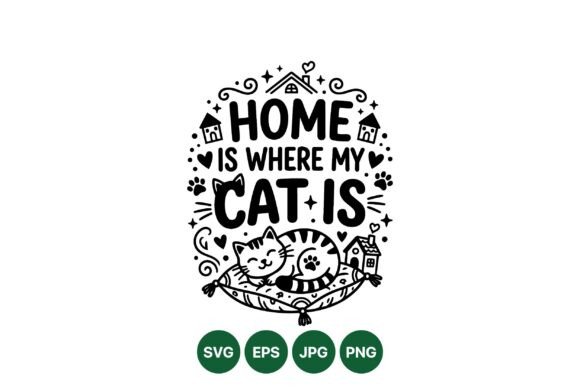
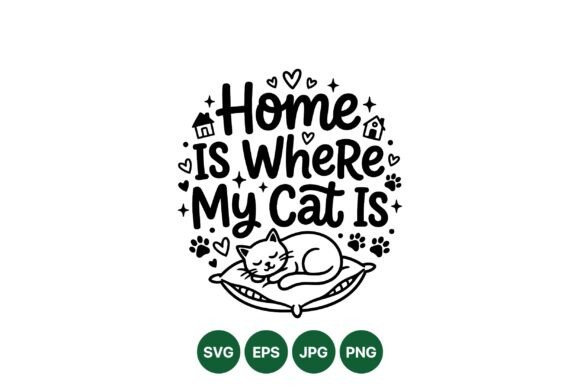
First glance at Home is Where Cat Sleeps SVG lands softly: a sleeping cat curled into a pillow, surrounded by gentle script and heart-shaped paw prints. It’s not loud or busy—it breathes calm. As an embroidery designer who’s stitched hundreds of cat-themed pieces for baby blankets, boutique aprons, and Etsy sweatshirt collections, I immediately sensed its quiet strength. This isn’t a design shouting for attention; it’s the kind that makes someone pause, smile, and say, “That’s *us*.” I tested it on a linen-cotton tea towel first—simple, textured, unforgiving—and the balance held. The cat’s outline stayed clean, the text remained legible at 3.5”, and the heart paws read as sweet accents, not clutter.
Where It Shines (and Where It Needs Care)
Home is Where Cat Sleeps SVG thrives in projects where softness and sincerity matter most: embroidered pillow covers for nursery decor, minimalist tote bags for cat-loving small shop owners, and personalized baby onesies with delicate fill stitch around the cat’s fur. On medium-weight cotton sweatshirts, the design reads beautifully at 4–4.5” wide—enough room for satin-stitched pillow edges to catch light without overwhelming the fabric. I also used it as an embroidered patch on denim jackets for a craft fair lineup; the black-and-white vector translated cleanly into thread, especially when paired with matte black and ecru threads.
But real embroidery work means respecting limits. On stretchy fabrics like ribbed knits or thin jersey tees, the fine script (“Home is Where…”) needs extra stabilizer—preferably cutaway plus a light tear-away top layer—to prevent letter distortion. Curved surfaces like caps require repositioning the design lower on the front panel, avoiding the crown seam where puckering can blur the cat’s ear detail. And while the heart paw prints are charming, they’re tiny—under 0.25” each—so I’d skip them entirely on dense terrycloth towels or fleece-lined baby hats unless stitching at 5x magnification and using 60-weight thread.
Real-World Use: A Custom Embroidered Pillow Cover for a Local Boutique
Last month, I adapted Home is Where Cat Sleeps SVG for a limited-run pillow cover order from a neighborhood gift shop. Their customers love handmade home goods with personality—not generic clip art. I resized the design to 5.25” wide, simplified the inner text spacing slightly for better stitch flow, and ran a test on scrap linen canvas with medium-cutaway stabilizer. The result? Crisp outlines, no thread nesting in the cat’s curled tail, and zero bleeding on the pillow’s off-white background. Customers responded instantly: three repeat orders in two weeks, and one tagged photo of the pillow beside a real sleeping cat on Instagram. That’s the quiet power of this design—it feels intentional, not automated.
What It Adds to Your Craft Business (and What It Doesn’t Promise)
As an Etsy seller and small shop product developer, I look beyond prettiness—I ask: Does this raise perceived value? Does it build trust? With Home is Where Cat Sleeps SVG, yes—when executed well. Its balanced negative space gives breathing room for thread texture, making finished products feel artisanal, not mass-printed. That translates directly to higher price tolerance: $38 for a linen pillow cover with this design sells easier than $28 for a busier, denser motif. It also photographs cleanly for printable mockups, which matters for digital product sellers building cohesive brand assets.
But it won’t carry a whole collection alone. It’s a focused moment—not a versatile all-in-one. Don’t expect it to scale down to a 1.75” cap front without losing legibility, and don’t force it onto dark fabric without testing thread contrast first. Black thread on navy sweatshirts works; white thread on charcoal requires a bright underlay pass to avoid dullness. Also, while the SVG file gives flexibility for resizing, remember: embroidery files aren’t just vectors—they need stitch logic. If you’re converting this for machine embroidery, check how the curves translate into satin and fill stitch paths. Some auto-digitizers flatten the pillow’s soft edge into jagged steps—manual cleanup helps.
Practical Designer Notes Before You Stitch
- Always run a test stitch on scrap fabric matching your final project’s weight and texture—especially for baby embroidery or holiday embroidery where durability matters.
- Review stitch density in the cat’s body and pillow area; overly dense fills can cause stiffness on lightweight apparel.
- Confirm hoop size compatibility—this design fits comfortably in a 5x7 hoop, but pushing it to 6x10 adds unnecessary complexity for most use cases.
- Inspect small details like paw print curves and serif endings on the word “Sleeps” at actual stitch size—what looks clean on screen may feather or merge in thread.
- Test black-and-white mockups on both light and dark backgrounds before listing on Etsy or launching a small shop product line.
- Use appropriate stabilizer: cutaway for knits, tear-away for stable wovens, and water-soluble for delicate baby embroidery.
- Verify licensing terms before selling finished items or bundling the SVG as part of a commercial embroidery bundle—this is a Graphics asset, not automatically cleared for resale.
Final Thought: A Design That Earns Its Place
Home is Where Cat Sleeps SVG doesn’t try to be everything. It’s a focused, tender illustration—designed to land gently, stitch cleanly, and resonate quietly. For embroidery designers building authentic connections through custom apparel, personalized gifts, or boutique merchandise, it’s a reliable, emotionally intelligent choice. It works because it respects the craft: the fabric, the thread, the customer’s eye, and the quiet joy of a cat asleep in the sun. Just give it the thoughtful prep it deserves—and let it do what it does best.