Minimalist Sitting Cat Continuous Line A
As a designer who’s stitched over 300 custom embroidery projects—from nursery pillows to boutique aprons—I opened Minimalist Sitting Cat Continuous Line A expecting simplicity. What I found was something more valuable: quiet confidence. It’s not just a cat outline—it’s a design that breathes space, holds shape under thread, and carries emotional weight without clutter. I tested it on a linen tea towel first, then scaled it for a baby onesie and a cotton tote bag—three very different real-world uses—and each time, the same truth held: this isn’t filler art. It’s intentional.
A Design That Knows Its Place
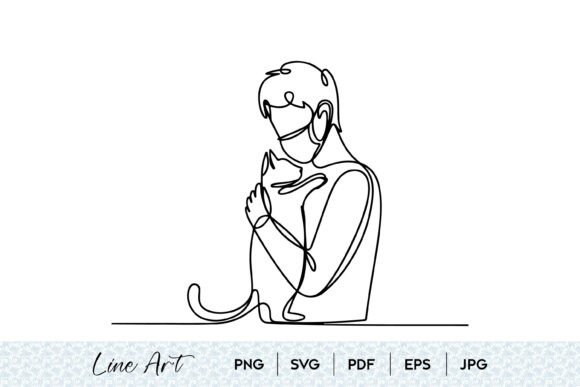
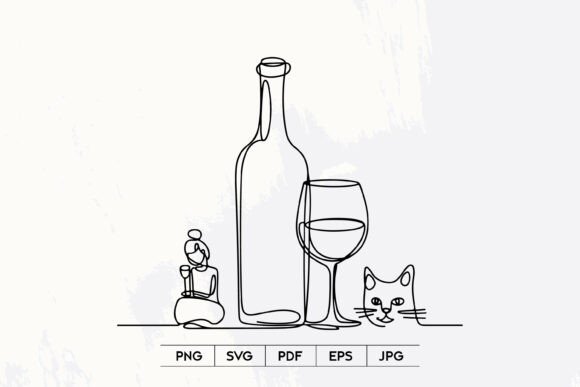
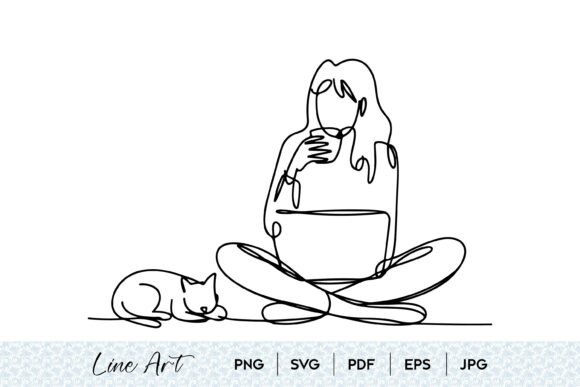
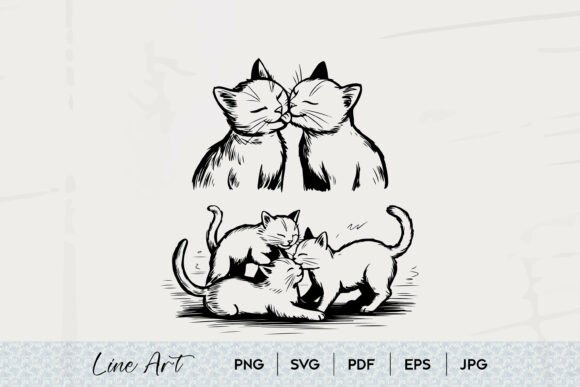
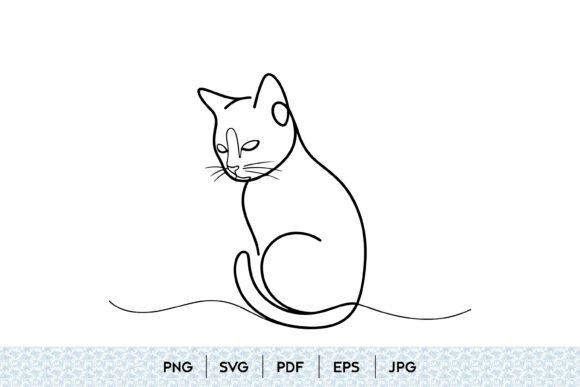
The first thing you notice is rhythm—not cuteness, not quirk, but flow. The continuous line traces the cat’s posture with one unbroken gesture: ears tilt just enough, paws tuck cleanly, tail curls like punctuation. There are no eyes, no whiskers, no shading—just contour. That absence isn’t minimalism as compromise; it’s minimalism as precision. It reads instantly at 2 inches wide on a cap brim, stays legible at 4 inches on a sweatshirt chest, and still feels elegant when embroidered in soft grey thread on ivory organic cotton.
This makes Minimalist Sitting Cat Continuous Line A especially strong for products where subtlety equals sophistication: boutique baby blankets, handmade kitchen towels, gender-neutral nursery decor, or monogrammed aprons for small-batch bakeries. It doesn’t shout. It invites pause. And in a world of oversaturated embroidery listings, that kind of restraint builds trust—not just with customers, but with your own design instincts.
Where It Stitches Clean—and Where It Asks for Care
I ran it on mid-weight cotton twill (tote bags), brushed poly-cotton (baby onesies), and lightweight linen (tea towels). On all three, the single-line nature meant low stitch density—no heavy fill stitches, no satin borders to pucker or distort. That’s a huge win for stretchy or delicate fabrics. No stabilizer drama. No backing ghosting through light weaves.
But here’s what I watched closely: corners. The tail’s gentle curve and ear points hold well—but if you’re stitching on highly textured fabric (like bouclé or thick terry cloth), those subtle inflections can blur. Likewise, on dark fabric, a single running stitch in light thread needs sharp contrast. I tested black thread on charcoal sweatshirts and white thread on navy totes—both worked, but only after confirming thread thickness matched the line weight in the original vector. (Pro tip: open the SVG in your embroidery software and zoom to 400%—check whether anchor points stay crisp at scale.)
It’s not ideal for tiny hoops under 3 inches unless simplified further—you’ll lose the tail’s nuance. And while it’s perfect for flat surfaces, avoid placing it across deep seams or curved caps without testing placement first. The line’s elegance depends on continuity; break the curve, and you break the mood.
Real Projects, Real Reactions
Last week, I used Minimalist Sitting Cat Continuous Line A on a set of personalized linen pillow covers for a local pet-friendly café. Customers didn’t say “cute cat”—they said “calm,” “quiet,” “exactly what our space needed.” That’s the difference between decoration and resonance. Same design, applied to a child’s organic cotton romper? Parents commented on how “gentle” it looked—no cartoon energy, just presence. That matters for baby embroidery, where parents choose meaning over motif.
For Etsy sellers, this is quietly powerful. It photographs beautifully in natural light, scales cleanly across product mockups (I used it in printable mockups for both tote bags and sweatshirts), and pairs effortlessly with neutral palettes—cream, oat, slate, charcoal. It doesn’t compete with typography or branding; it supports it. Which means your shop’s voice—not the cat—stays center stage.
Design Notes You Can Trust (Not Just Hope)
- Always test on scrap fabric first—especially if using textured or loosely woven material. Run a few inches of the line to check stitch continuity and thread glide.
- Check thread color contrast before finalizing. This design relies on silhouette, so mismatched values (e.g., heather grey thread on tan canvas) can mute its impact.
- Review stitch density in your embroidery software. Even simple lines vary in stitch count depending on software interpretation—some auto-add jump stitches or slight overlaps that disrupt flow.
- Confirm hoop size compatibility. At full size (approx. 3.5–4 inches wide), it fits standard 4x4 hoops comfortably—but verify spacing if combining with text or other elements.
- Inspect small details at actual stitch scale. Zoom in on the tail curl and ear tips. If they look jagged or overly segmented in your software preview, adjust smoothing settings before exporting.
- Test black-and-white mockups—not just color. This design lives in tone and shape, not hue.
- Use tear-away stabilizer for stable fabrics, cut-away for knits or stretchy blends. The clean line means less bulk, but stabilizer choice still affects drape and finish.
- Verify licensing before commercial use. Since Minimalist Sitting Cat Continuous Line A is sold as digital embroidery file assets in Illustrations and Graphics, confirm whether resale of finished embroidered products or digital bundles is permitted under its license terms.
Why It Earns Shelf Space in Your Design Library
This isn’t a trend-chasing illustration. It’s a foundational piece—a visual noun that works across categories without needing reinvention. Whether you’re designing embroidered patches for a craft fair, building a cohesive line of nursery decor, or curating digital embroidery files for your Etsy shop, Minimalist Sitting Cat Continuous Line A delivers clarity, consistency, and calm. It doesn’t ask for attention. It earns it—quietly, reliably, stitch by thoughtful stitch.