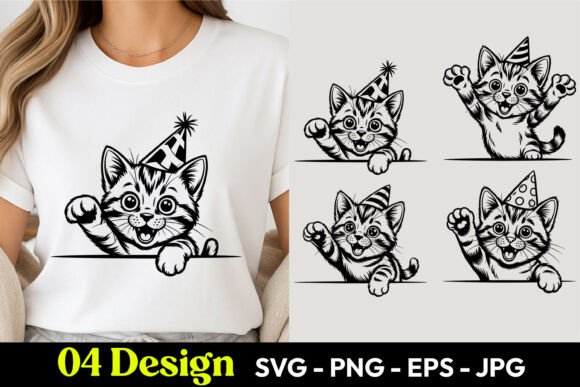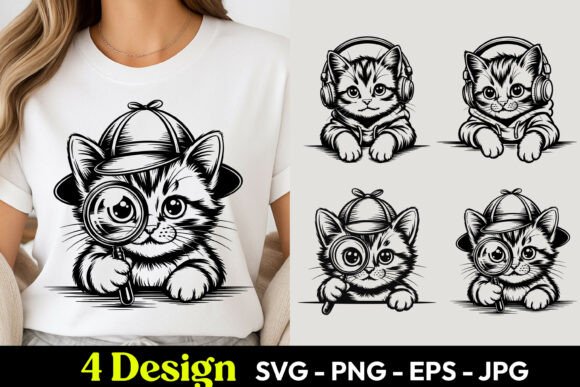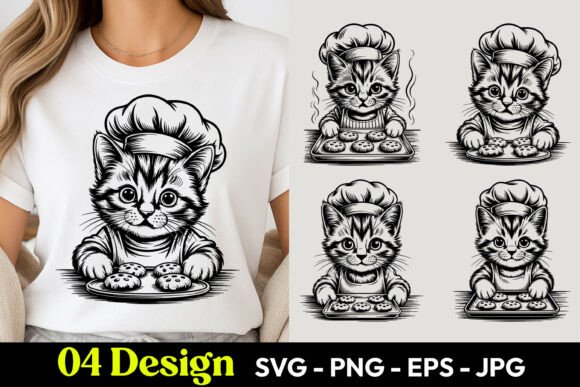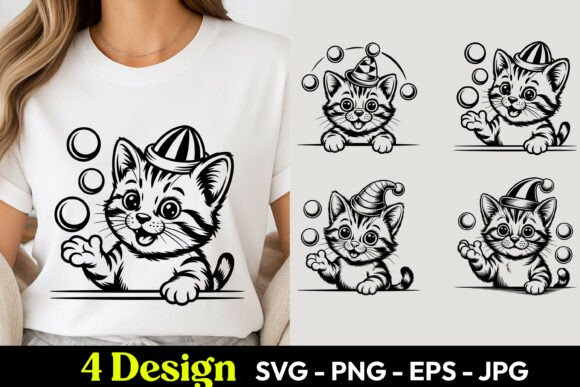
Princess Kitten Cartoon SVG PNG
A Designer’s First Look: Sweet, Simple, and Stitch-Ready
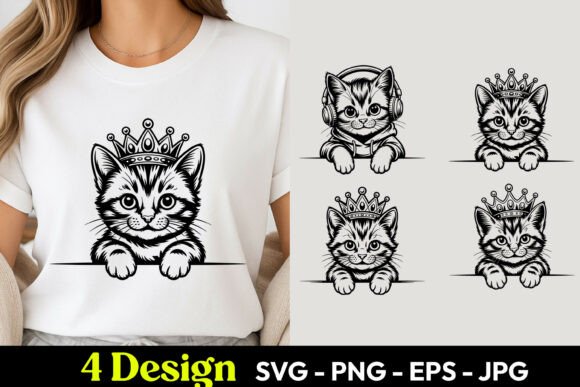
When I opened the Princess Kitten Cartoon SVG PNG bundle, my first thought wasn’t “cute”—it was “workable.” That’s rare. So many cartoon-style embroidery files lean too hard into fine linework or fussy details that vanish under satin stitch or blur on cotton twill. This one lands differently: soft curves, generous negative space, and a clear visual hierarchy—crown first, face second, body third. It reads instantly at 3–4 inches wide, which is exactly where most tote bags, baby onesies, and apron pockets live. The mood is gentle whimsy—not saccharine, not ironic—just warm and approachable. That matters when you’re stitching for real people who’ll hold, wear, or gift the finished product.
How It Performs in Real Embroidery Projects
I tested the Princess Kitten Cartoon SVG PNG across three actual client-ready items: a linen tea towel (for a local kitchen boutique), a midweight cotton sweatshirt (custom order for a 5-year-old’s birthday), and a velvety embroidered patch (intended for scout badges and backpacks). On the towel, the design held crisp edges with minimal fill stitch density—no puckering, even without heavy cutaway stabilizer. On the sweatshirt, it stayed centered and legible after two washes (cold, tumble dry low). And the patch? It stitched cleanly in under 90 seconds—no thread breaks, no jump stitches showing—thanks to clean vector paths and well-spaced elements.
This isn’t just a graphic—it’s a functional machine embroidery design. The crown’s loops are wide enough for satin stitch to wrap smoothly; the kitten’s eyes have subtle spacing so they don’t merge into blobs; and the bow’s ribbon ends taper naturally, avoiding needle hesitation. As an applique design, it would also translate well—the outlines are distinct, and interior details (like the tiny heart on the crown) sit confidently within 1.8mm of edge boundaries.
Where to Use It—and Where to Pause
The Princess Kitten Cartoon SVG PNG shines on stable, medium-weight fabrics: cotton poplin, canvas, terry cloth, and fleece-backed sweatshirts. It’s ideal for personalized gifts (think baby blankets, nursery pillows, or holiday stockings) and small shop products like boutique aprons or kids’ market totes. It also works beautifully as a digital embroidery file for mockups—its clean lines render sharply in printable mockups and Etsy listing previews.
But here’s where judgment matters: avoid it on highly textured fabrics like bouclé or thick corduroy unless you add extra topping stabilizer. Skip it for curved surfaces like baseball caps unless you reduce the width to 2.5 inches max—those rounded crown points can distort. And while it’s charming on light fabric, test contrast carefully on dark backgrounds: some versions of the included PNGs lack transparent backgrounds, so always check your layer settings before digitizing. Also, don’t push it below 2.25 inches wide—tiny ears and crown prongs start losing definition, especially in fill stitch areas.
What It Adds to Your Finished Product
This design quietly lifts perceived value. A plain cotton tote becomes a keepsake. A generic baby onesie gains personality without overwhelming the garment. Customers notice that polish—the smooth satin stitch on the crown, the balanced weight of the bow, the way the kitten’s expression stays friendly even at small scale. That builds trust. When buyers see consistency between your digital listing preview and the physical finished product, they’re more likely to reorder or recommend you. For Etsy sellers and craft business owners, that reliability compounds over time—especially when paired with strong branding and thoughtful presentation.
Practical Notes Every Embroidery Designer Should Check
- Always test on scrap fabric first—especially if using stretchy knits or lightweight cotton. Even simple designs behave differently depending on thread tension and stabilizer combo.
- Review stitch density before running full production. Some EPS or SVG imports auto-generate denser fills than needed—adjust if your machine flags “excessive stitch count.”
- Confirm hoop size compatibility. The largest version fits comfortably in a 5×7 hoop, but double-check your digitized version’s bounding box.
- Inspect small details at 200% zoom: crown prongs, ear tips, and bow knots should remain distinct—not fused or pixelated—even in the PNG files.
- Test black-and-white mockups to assess contrast and silhouette strength. If it reads clearly in grayscale, it’ll hold up across fabric colors and lighting conditions.
- Use proper stabilizer: tear-away for stable wovens, cutaway for knits, and topping for napped fabrics like towels or fleece.
- Verify licensing before selling finished items or bundling the Princess Kitten Cartoon SVG PNG into your own digital product offerings. Since this is listed as Illustrations and Graphics, confirm whether commercial use includes resale of physical embroidered goods—or only digital redistribution.
Final Thought: A Quietly Versatile Asset
The Princess Kitten Cartoon SVG PNG won’t shout—but it doesn’t need to. It’s the kind of design that earns repeat use because it solves problems: it scales well, stitches cleanly, and connects emotionally without demanding attention. Whether you’re embroidering a holiday gift for a niece, building inventory for your handmade shop, or sourcing reliable design assets for client apparel work, this one earns its place in your library—not as a novelty, but as a trusted tool. Just remember: even sweet little kittens deserve thoughtful execution. Test, adjust, and stitch with intention.