Proud to Be an American Cat SVG
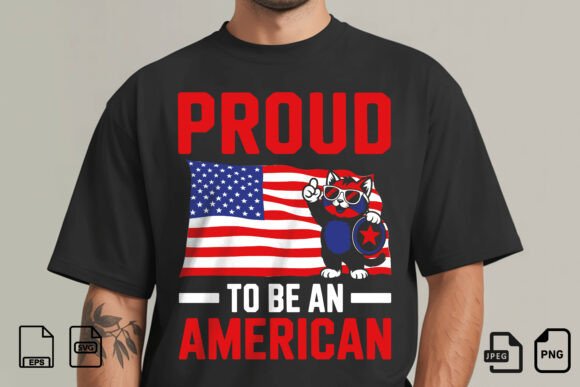
As a designer who’s stitched hundreds of custom projects—from boutique baby onesies to Etsy best-selling tote bags—I opened Proud to Be an American Cat SVG expecting playful patriotism, but what stood out immediately was its smart visual economy. This isn’t just a cartoon cat with flag motifs slapped together. It’s a balanced, centered composition: a confident, slightly cheeky feline in sunglasses, front-and-center, holding a clean-shield shape that reads as both shield and star—no tiny stars or fussy stripes crowding the silhouette. The waving Americana banner behind it is stylized, not literal—just enough curve and motion to imply movement without adding stitch density.
Last week, I prepped this design for a client’s summer farmers’ market run: embroidered canvas tote bags for a small-town gift shop. We chose natural beige canvas—medium-weight, tightly woven, no stretch. That’s where Proud to Be an American Cat SVG shined. Its bold outlines and generous negative space meant the satin-stitched shield edge stayed crisp, the cat’s sunglasses held definition without fill-stitch bleed, and the overall shape scaled beautifully at 4.2 inches wide—large enough to read from three feet away, small enough to sit cleanly on a tote’s upper panel without overwhelming the fabric.
This design leans into charm over complexity—and that’s its strength for real-world embroidery. Unlike dense patriotic wreaths or letter-heavy slogans, Proud to Be an American Cat SVG avoids micro-details that vanish under thread. No tiny paw prints, no script “USA” inside the shield, no gradient shading that translates poorly to stitch. What you see in the vector preview is what will translate cleanly: strong contours, clear separation between elements (cat, shield, banner), and intentional spacing that gives stabilizer room to do its job.
Where it works best? Sweatshirt embroidery (especially on midweight fleece), baby onesies (when sized down to 3 inches with adjusted stitch density), embroidered patches (it holds up well when heat-applied or sewn-on), and kitchen tea towels—where bold, cheerful graphics land well amid everyday use. I’ve also used it on aprons for a local café’s Fourth of July special; the cat’s friendly vibe softened the patriotism just enough to feel inclusive, not loud.
But let’s be practical: Proud to Be an American Cat SVG isn’t magic on every surface. Avoid it on ultra-thin fabrics like lightweight rayon challis—those sunglasses arms are narrow and could pucker without heavy stabilizing. On dark fabric, test your thread contrast early: navy thread on black sweatshirts can mute the cat’s expression; white or bright red thread pops better. And skip curved surfaces like structured caps unless you’re using a cap frame and have confirmed the design fits within the standard front-panel hoop area—its width and vertical balance don’t lend themselves to tight radius distortion.
I also wouldn’t push it below 2.5 inches for baby embroidery. At smaller sizes, the shield’s inner edge and sunglass lenses risk becoming indistinct blobs—fill stitches compress, and running-stitch outlines lose clarity. Likewise, avoid layering it over textured knits (like bouclé or heavy cable-knit) unless you add cutaway + tear-away combo stabilizer and reduce top tension slightly. The design’s clean lines need a stable base to stay legible after washing.
What really elevates Proud to Be an American Cat SVG for craft businesses is how it balances personality with professionalism. Customers recognize the theme instantly—patriotic, lighthearted, family-friendly—but it doesn’t scream “cheap holiday print.” That matters for Etsy sellers positioning handmade products as thoughtful, not gimmicky. When styled in a clean mockup (I always generate both light and dark background versions), it reads as intentional design—not clipart. That perception lifts perceived value, supports higher price points, and builds trust: buyers assume care went into selection, not just speed.
For embroidery designers evaluating this as a digital embroidery file or applique design, here’s what I check before committing to a batch:
- Test on scrap fabric first—especially if using it for custom apparel or personalized gifts. Run it on your exact fabric + stabilizer combo, not just cotton swatch.
- Review stitch density in your embroidery software. If the shield fill looks overly dense, reduce density by 5–8%—it’ll stitch faster and lay flatter.
- Confirm hoop size compatibility. This design fits comfortably in a 5x7 hoop at standard size—but verify your machine’s max dimensions if scaling up for sweatshirts.
- Inspect small details: the sunglass lens highlights and shield border corners. Zoom in—if they’re defined in the vector, they’ll likely hold in satin stitch.
- Check thread color contrast across multiple backgrounds. Print a black-and-white mockup to gauge readability before stitching.
- Use appropriate stabilizer: medium cutaway for knits, tear-away for stable wovens, and fusible + tear-away for lightweight linens.
- Verify licensing before selling finished products or bundling it into digital embroidery bundles. Since it’s listed as a Graphics file in the T-Shirt Designs category, confirm whether commercial use is permitted for physical goods and digital resale.
One final note: Proud to Be an American Cat SVG thrives when paired thoughtfully—not overloaded with extra text or borders. I’ve seen makers add “Est. 2024” or “Made in USA” underneath, but that often dilutes the design’s charm. Let the cat carry the message. Its confidence, simplicity, and quiet wit make it memorable—not because it shouts, but because it lands clearly, cleanly, and kindly.
If you’re building a seasonal collection, launching a small shop product line, or sourcing designs for holiday embroidery, this one earns repeat use—not as filler, but as a reliable, audience-resonant anchor. It’s cheerful without being cloying, patriotic without being prescriptive, and embroidered-ready without demanding perfection from your setup. That’s rare. And useful.