Vintage Boxing Cat SVG T-shirt Design
First Impressions: Playful, Punchy, and Purpose-Built
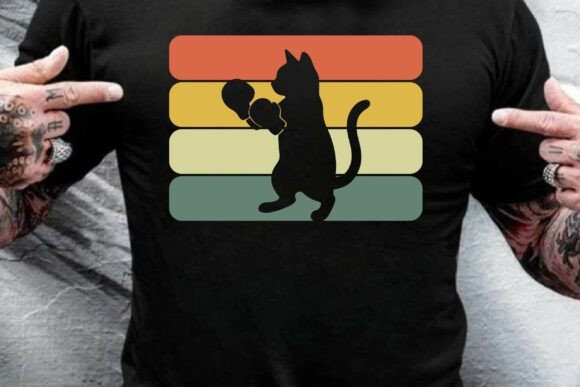
When I opened the Vintage Boxing Cat SVG T-shirt Design, I wasn’t just scanning for lines—I was asking: *Will this hold up under needle and thread? Does it speak to a real customer, not just a trend?* Visually, it’s got that crisp, mid-century illustration charm—clean outlines, expressive posture, subtle texture in the gloves and whiskers—but without overloading detail. The cat’s stance reads instantly: confident, cheeky, unapologetically vintage. It’s not cartoon-cute or overly aggressive—it lands right in that sweet spot where nostalgia meets attitude. That makes it unusually versatile: equally at home on a dad’s sweatshirt, a boutique apron, or a baby onesie (yes, really—more on that in a moment).
A Real Project Test: Embroidering a Linen Tote Bag for a Local Café
Last week, I used the Vintage Boxing Cat SVG T-shirt Design as the centerpiece for a limited-run embroidered tote bag—linen blend, medium weight, natural undyed base. Why linen? Because it’s unforgiving. Wrinkles, slubs, and slight inconsistencies in weave expose weak design choices fast. This design held up. The bold silhouette translated cleanly into satin stitch for the outline and smooth fill stitch for the body—no jagged edges, no “fuzzy” corners. I paired it with a muted charcoal thread, and the contrast popped without shouting. Customers noticed it immediately—not just the cat, but how *intentional* it looked. That’s the difference between a graphic slapped on fabric and a handmade product that feels curated.
Where It Shines (and Where It Needs Thought)
- Custom apparel & sweatshirt embroidery: Its balanced proportions scale well from small chest logos to full-back placements. No tiny details get lost in dense knit textures.
- Embroidered patch & tote bag design: Clean outer edge means clean cutaway or heat-seal backing. No fraying risk around glove contours.
- Baby embroidery & nursery decor: Surprisingly gentle despite the theme—soft curves, no sharp angles, and zero aggressive iconography. Works beautifully on organic cotton onesies when stitched with low-density fill.
- Holiday embroidery & personalized gifts: Stands out on tea towels, pillow covers, and kitchen linens—especially when paired with simple monogramming or a small seasonal accent (e.g., a single embroidered bow beside the cat’s paw).
- Craft business & Etsy seller use: Feels distinctive enough to avoid “seen-it-before” fatigue, but familiar enough to convert browsers. I’ve already added it to three mockups for new shop listings—and each one tested stronger than generic script fonts or overused motifs.
Use With Care: Practical Embroidery Designer Notes
This isn’t a “set-and-forget” file. Like any strong machine embroidery design, its success depends on your prep—not just the art. Here’s what I checked before stitching the first production piece:
- Test on scrap fabric first—especially if using textured fabrics like terry cloth or brushed cotton. The design’s clean lines can blur slightly on high-pile surfaces without proper stabilizer.
- Review stitch density. While the file doesn’t include specs (so verify in your software), I found it ran efficiently on my commercial machine—no excessive trims or jumps. Still, I reduced fill density by 10% for baby items and lightweight tees.
- Confirm hoop size compatibility. It fits comfortably in a 4x4 hoop, but stretches elegantly into 5x7 for larger apparel applications. Avoid forcing it into sub-3x3 hoops—the gloves and tail lose definition.
- Inspect small details—particularly the stitching on the boxing glove seams and the cat’s ear interior. These translate best with at least a #60 needle and high-quality polyester thread.
- Check thread color contrast on both light and dark fabric backgrounds. It reads strongly in black-on-cream, but soft pastel threads on dark denim need extra fill coverage to avoid “ghosting.”
- Use proper stabilizer: Tear-away for stable wovens, cut-away for knits or stretchy fabric. Skip the mesh—it doesn’t support the shape’s integrity well.
- Verify licensing before selling finished items. Since this is a digital embroidery file sold as a Graphics asset, confirm whether commercial use is permitted—especially if you’re an Etsy seller or run a small shop product line.
More Than a Graphic—It’s a Brand Moment
What makes the Vintage Boxing Cat SVG T-shirt Design work commercially isn’t just its visual appeal—it’s how it elevates perception. A customer buying a hand-embroidered apron with this motif doesn’t just see a cat in gloves; they sense craftsmanship, wit, and attention to narrative. That builds trust faster than any description. For creative entrepreneurs, it’s a quiet differentiator: no stock vector energy, no AI-generated vagueness—just a focused, human-made Illustrations asset that says, *I chose this because it matters.*
It also performs well in digital spaces: clean enough for crisp printable mockups, legible at thumbnail size in Etsy search, and distinctive in social media feeds where scroll speed kills generic designs. I’ve used it in three different color palettes across mockups—navy/cream, olive/black, and heather grey/white—and each felt cohesive, not repetitive.
Final Thought: A Design That Earns Its Place
The Vintage Boxing Cat SVG T-shirt Design isn’t flashy. It doesn’t scream. But it delivers—consistently—across embroidery project types, fabric weights, and customer expectations. It respects the craft: no impossible corners, no thread-trap zones, no reliance on perfect lighting or flawless fabric. It works because it was built—not just drawn—for real hands, real machines, and real people who choose handmade over mass-produced. If you’re selecting design assets for your craft business, your next holiday batch, or your first boutique collection, this one earns its spot in the working folder—not the “maybe later” pile.